
Issue
Copyright (c) 2026 نعيم صلاح, محمد عكة, أماني رومي (Author)

This work is licensed under a Creative Commons Attribution 4.0 International License.
The impact of using artificial intelligence tools on improving the quality of services provided to the elderly

Corresponding Author(s) : محمد عكة
Journal of Al-Mubadara,
Vol. 5 No. 2 (2026)
Abstract
Abstract:
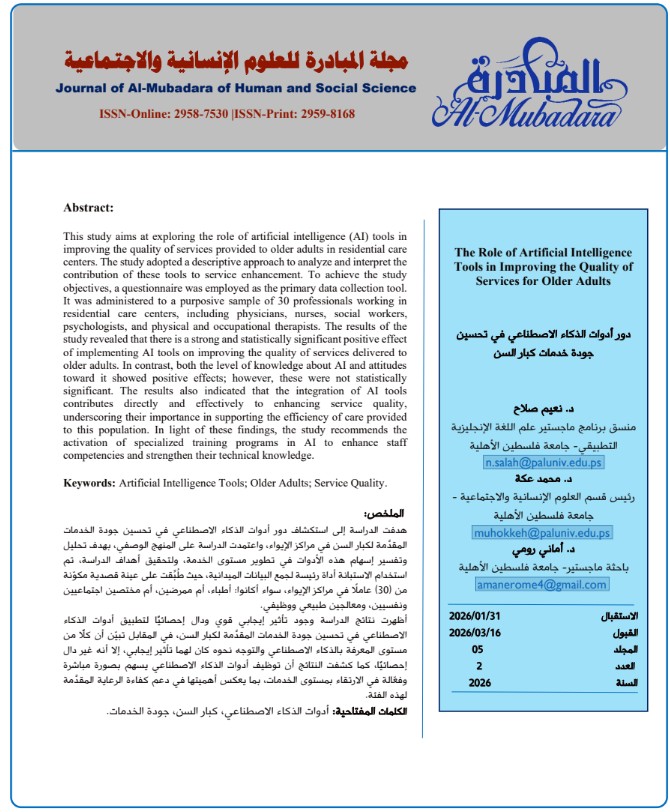
This study aims at identifying the impact of using artificial intelligence (AI) tools on improving the quality of services provided to the elderly. The study adopted the descriptive–analytical approach and employed a questionnaire as the main data collection tool, which was administered to a purposive sample of 30 workers. The findings of the study revealed that the application of AI tools has a strong and significant positive impact on enhancing service quality. In contrast, both knowledge of and attitudes toward artificial intelligence showed a positive but statistically insignificant impact. Overall, the findings indicate that the implementation of AI tools contributes substantially to improving the quality of services for the elderly, whereas the attitudes toward AI demonstrate a positive yet statistically insignificant influence on service quality.
Keywords
Download Citation
Endnote/Zotero/Mendeley (RIS)BibTeX
- • Abed, M. (2009). Evaluation of institutional residential care in the West Bank from the perspective of residents [Unpublished master’s thesis]. Al-Quds University, Palestine.
- • Abu Al-Nasr, M. M. M. (2015). Total quality management: The Japanese Kaizen strategy in organizational development. Cairo, Egypt: Arab Training and Publishing Group.
- • Akhand. S, Patil. N, Rithoriya. M (2024). Exploring AI Tools: Types, Applications, Challenges, and Future Trends. Educational Administration Theory and Practice Journal, 30 (5). file:///C:/Users/ncc/Downloads
- • Al-Ashoul, M. H. (2022). The impact of using artificial intelligence on improving the quality of consulting services provided by external auditors. Journal of Financial and Commercial Research, 23(4), 94–134.
- • Al-Harbi, R., & Al-Qahtani, R. (2026). The use of artificial intelligence tools in the education sector in Saudi Arabia: A proposed regulatory framework. Journal of the Faculty of Sharia and Law in Assiut, 38(2), 1063–1129.
- • Al-Shahri, W. G., & Abdullah, I. A. (2024). The impact of using artificial intelligence tools on improving the quality of supply services in the public sector: An applied study on the Ministry of Human Resources and Social Development in the Kingdom of Saudi Arabia. Journal of Economic, Administrative, and Legal Sciences (JEALS), 8(5), 1–19.
- • Al-Shammari, R. (2024). The extent of artificial intelligence applications’ contribution to developing research skills among postgraduate students at Hafar Al-Batin University. Journal of the Faculty of Education (Assiut), 40(10.2), 254–277.
- • Al-Wakeel, I. M. H. (2023). The impact of using artificial intelligence and its role in developing services and reducing corruption in the governmental sector: An applied study on government infrastructure. Journal of the Higher Institute for Qualitative Studies, 3(3), 9001–9017.
- • Beit Saint Nicholas Publications. (2024). Social care for the elderly at Beit Saint Nicholas (Brochure). Beit Jala, Palestine: Beit Saint Nicholas.
- • Diab, R. M. (2020). The role of artificial intelligence in improving the quality of banking services. Arab Journal of Informatics and Knowledge Management, Arab Foundation for Education, Science and Arts, 1(9), 1162–1182.
- • Diab, R. M. (2022). The role of artificial intelligence in improving banking service performance. Arab Journal of Informatics and Information Security, 3(9). Arab Organization for Education, Science, and Culture.
- • Esmaeilzadeh, P., Mirzaei, T., & Dharanikota, S. (2020). Patients’ perceptions toward human–artificial intelligence interaction in health care: Experimental study. JMIR Preprints. https://www.jmir.org/2021/11/e25856/.
- • Garkisch, M., & Goldkind, L. (2024). Considering a Unified Model of Artificial Intelligence Enhanced Social Work: A Systematic Review. Journal of Human Rights and Social Work, 1-20.
- • Gubran, M. (2022). Requirements for practicing casework social workers’ role with elderly people in light of social role theory. Journal of Social Work, 74(2), 95–138.
- • hahata, N. (2022). Employing artificial intelligence applications in the educational process. Scientific Peer-Reviewed Journal of the Egyptian Association for Educational Computer Science, 10(2), 205–214.
- • Maree, J. G. (2022). The psychosocial development theory of Erik Erikson: critical overview. The influence of theorists and pioneers on early childhood education, 119-133.
- • Mustafa, A. (2024). Artificial intelligence as a mechanism to improve the quality of social care services in civil society organizations: An applied study on elderly care associations. Scientific Journal of Public Policy and Development Studies, 3(2), 144–199.
- • Nasri, N. (2022). The reality of health and social services provided in elderly care homes [Unpublished master’s thesis]. University of 08 May 1945, Algeria.
- • Nuwasiima, M., Ahonon, M. P., & Kadiri, C. (2024). The Role of Artificial Intelligence (AI) and machine learning in social work practice.
- • Sardouk, A. (2020). Uses of smart applications in university libraries: Global experiences and the current reality in the Maghreb countries. Journal of Information Studies and Technology, 2(10).
- • Taroudi, S., & Waleetim, S. (2014). Roles within the family and their contribution to family stability: A field study of families in the city of El Menea, Ghardaia. [Unpublished master’s thesis]. University of Ghardaia.
- • Winett, R. A., Williams, D. M., & Davy, B. M. (2009). Initiating and maintaining resistance training in older adults: A social cognitive theory-based approach. British Journal of Sports Medicine, 43(2), 114–119.
- • Witkowski, K., Okhai, R., & Neely, S. R. (2024). Public perceptions of artificial intelligence in healthcare: Ethical concerns and opportunities for patient-centered care. BMC Medical Ethics, 25, Article 74. https://bmcmedethics.biomedcentral.com/articles/10.1186/s12910-024-01066-4.
- • Younis, J. K. (2025). Professional intervention problems faced by social workers with elderly people with chronic diseases: A field study in Bethlehem Governorate [Unpublished master’s thesis]. Department of Humanities, Social and Educational Sciences, Faculty of Graduate Studies, Palestine Ahliya University.
- • Yuen, C. (2025). How is AI used in elderly care: Enhancing quality of life and support. SNF Metrics. https://snfmetrics.com/blog/how-is-ai-used-in-elderly-care/.
- • Zidan, S. (2010). Total quality management. Amman, Jordan: National Library and Documentation Department for Publishing and Distribution.
References
• Abed, M. (2009). Evaluation of institutional residential care in the West Bank from the perspective of residents [Unpublished master’s thesis]. Al-Quds University, Palestine.
• Abu Al-Nasr, M. M. M. (2015). Total quality management: The Japanese Kaizen strategy in organizational development. Cairo, Egypt: Arab Training and Publishing Group.
• Akhand. S, Patil. N, Rithoriya. M (2024). Exploring AI Tools: Types, Applications, Challenges, and Future Trends. Educational Administration Theory and Practice Journal, 30 (5). file:///C:/Users/ncc/Downloads
• Al-Ashoul, M. H. (2022). The impact of using artificial intelligence on improving the quality of consulting services provided by external auditors. Journal of Financial and Commercial Research, 23(4), 94–134.
• Al-Harbi, R., & Al-Qahtani, R. (2026). The use of artificial intelligence tools in the education sector in Saudi Arabia: A proposed regulatory framework. Journal of the Faculty of Sharia and Law in Assiut, 38(2), 1063–1129.
• Al-Shahri, W. G., & Abdullah, I. A. (2024). The impact of using artificial intelligence tools on improving the quality of supply services in the public sector: An applied study on the Ministry of Human Resources and Social Development in the Kingdom of Saudi Arabia. Journal of Economic, Administrative, and Legal Sciences (JEALS), 8(5), 1–19.
• Al-Shammari, R. (2024). The extent of artificial intelligence applications’ contribution to developing research skills among postgraduate students at Hafar Al-Batin University. Journal of the Faculty of Education (Assiut), 40(10.2), 254–277.
• Al-Wakeel, I. M. H. (2023). The impact of using artificial intelligence and its role in developing services and reducing corruption in the governmental sector: An applied study on government infrastructure. Journal of the Higher Institute for Qualitative Studies, 3(3), 9001–9017.
• Beit Saint Nicholas Publications. (2024). Social care for the elderly at Beit Saint Nicholas (Brochure). Beit Jala, Palestine: Beit Saint Nicholas.
• Diab, R. M. (2020). The role of artificial intelligence in improving the quality of banking services. Arab Journal of Informatics and Knowledge Management, Arab Foundation for Education, Science and Arts, 1(9), 1162–1182.
• Diab, R. M. (2022). The role of artificial intelligence in improving banking service performance. Arab Journal of Informatics and Information Security, 3(9). Arab Organization for Education, Science, and Culture.
• Esmaeilzadeh, P., Mirzaei, T., & Dharanikota, S. (2020). Patients’ perceptions toward human–artificial intelligence interaction in health care: Experimental study. JMIR Preprints. https://www.jmir.org/2021/11/e25856/.
• Garkisch, M., & Goldkind, L. (2024). Considering a Unified Model of Artificial Intelligence Enhanced Social Work: A Systematic Review. Journal of Human Rights and Social Work, 1-20.
• Gubran, M. (2022). Requirements for practicing casework social workers’ role with elderly people in light of social role theory. Journal of Social Work, 74(2), 95–138.
• hahata, N. (2022). Employing artificial intelligence applications in the educational process. Scientific Peer-Reviewed Journal of the Egyptian Association for Educational Computer Science, 10(2), 205–214.
• Maree, J. G. (2022). The psychosocial development theory of Erik Erikson: critical overview. The influence of theorists and pioneers on early childhood education, 119-133.
• Mustafa, A. (2024). Artificial intelligence as a mechanism to improve the quality of social care services in civil society organizations: An applied study on elderly care associations. Scientific Journal of Public Policy and Development Studies, 3(2), 144–199.
• Nasri, N. (2022). The reality of health and social services provided in elderly care homes [Unpublished master’s thesis]. University of 08 May 1945, Algeria.
• Nuwasiima, M., Ahonon, M. P., & Kadiri, C. (2024). The Role of Artificial Intelligence (AI) and machine learning in social work practice.
• Sardouk, A. (2020). Uses of smart applications in university libraries: Global experiences and the current reality in the Maghreb countries. Journal of Information Studies and Technology, 2(10).
• Taroudi, S., & Waleetim, S. (2014). Roles within the family and their contribution to family stability: A field study of families in the city of El Menea, Ghardaia. [Unpublished master’s thesis]. University of Ghardaia.
• Winett, R. A., Williams, D. M., & Davy, B. M. (2009). Initiating and maintaining resistance training in older adults: A social cognitive theory-based approach. British Journal of Sports Medicine, 43(2), 114–119.
• Witkowski, K., Okhai, R., & Neely, S. R. (2024). Public perceptions of artificial intelligence in healthcare: Ethical concerns and opportunities for patient-centered care. BMC Medical Ethics, 25, Article 74. https://bmcmedethics.biomedcentral.com/articles/10.1186/s12910-024-01066-4.
• Younis, J. K. (2025). Professional intervention problems faced by social workers with elderly people with chronic diseases: A field study in Bethlehem Governorate [Unpublished master’s thesis]. Department of Humanities, Social and Educational Sciences, Faculty of Graduate Studies, Palestine Ahliya University.
• Yuen, C. (2025). How is AI used in elderly care: Enhancing quality of life and support. SNF Metrics. https://snfmetrics.com/blog/how-is-ai-used-in-elderly-care/.
• Zidan, S. (2010). Total quality management. Amman, Jordan: National Library and Documentation Department for Publishing and Distribution.